Shining a light on abuse in assessment and treatment units
LDN London hosted its first Spotlight On event focusing on the abuse of people with learning disabilities and how to stop it
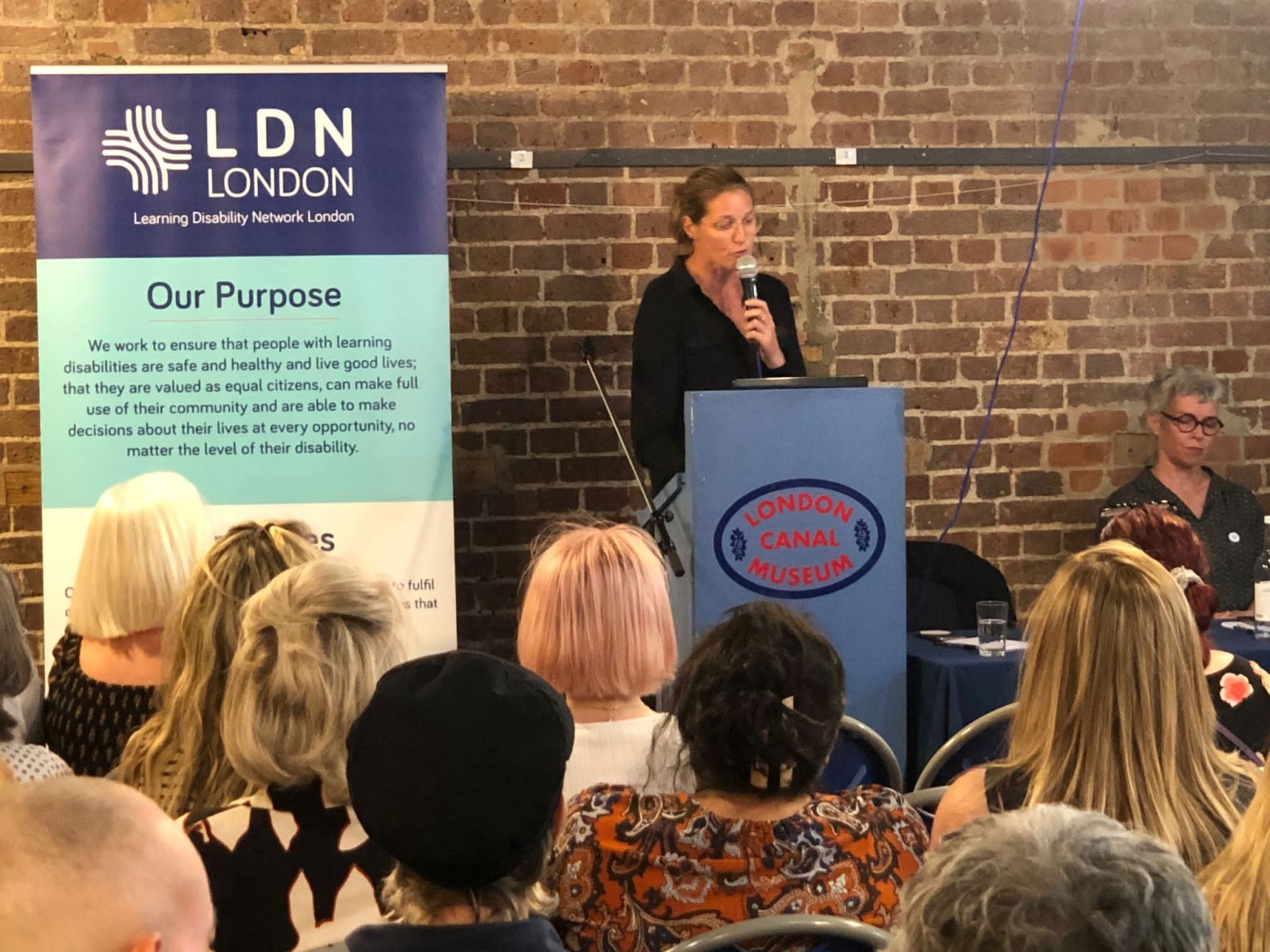
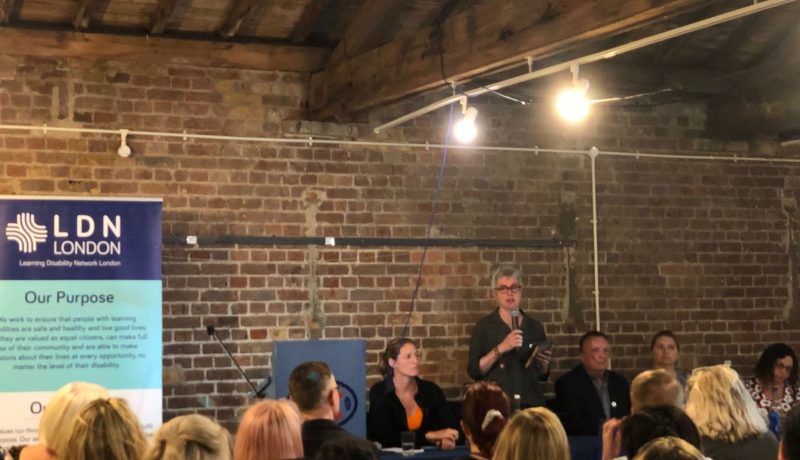
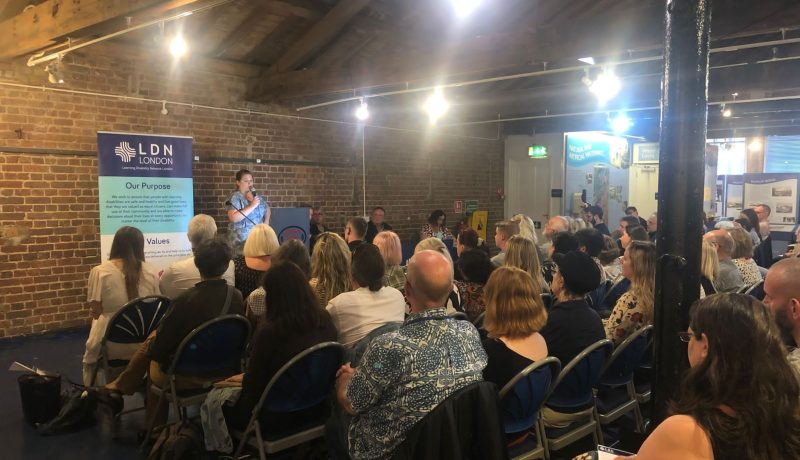
From our LDN Spotlight On Event on Thursday 13 July, held at London Canal Museum
LDN London recently held our first Spotlight On event, shining a light on the vital subject of the abuse of people with learning disabilities.
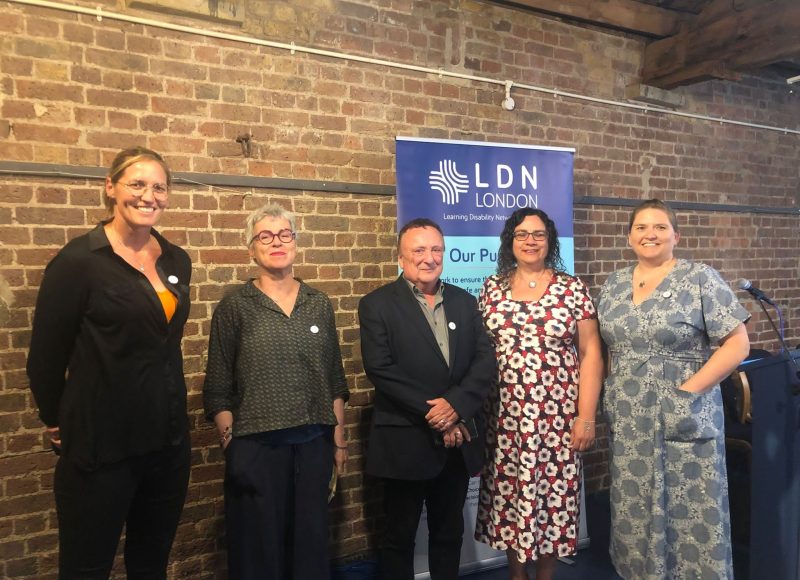
Our four guest speakers – Alexis Quinn, Sara Ryan, George Julian and Amanda Topps – talked about their own quite different experiences, with a focus on people with learning disabilities and autistic people being held in assessment and treatment units.
Currently over 2000 people with learning disabilities are detained in assessment and treatment units – hospitals where people in crisis are supposed to be assessed for a short period – despite a government pledge to reduce this and support people to move into their community.
This is some of what was said, you can also listen to the full audio recording here:
Alexis Quinn

Alexis, an autistic woman and author, spent four years being held in ATUs and gave a firsthand account of her experience.
She described why people often need support from an ATU in the first place:
Every single person with a learning disability had suffered some tragedy, or some crisis in the community that required a measure of support and compassion, which unfortunately wasn’t available.
Alexis told the audience, in chilling and vivid detail, how she was frequently restrained and handcuffed. She was held in a room with only a mattress. At times she had no choice but to eat food from the floor with her hands.
This treatment only made her feel worse – and she was already in crisis. The process of being detained created a vicious cycle where Alexis would become more anxious and stressed, then staff would restrain her again and she would get even more stressed.
Sometimes as many as six people would manhandle and restrain her while she was being injected and sedated.
There were also more subtle forms of trauma. For instance, the way she was dehumanised: “When you’re not perceived by other people, you become unable to perceive yourself… you don’t know you’re there. And so at times I would throw myself against the walls to see if I was still alive.”
Instead of being seen and treated as a human being, Alexis was viewed as “a danger to be controlled” she said. That meant staff treated her like a monster rather than a human being.
Alexis told about the time she was moved between two secure hospitals. She was transported in what looked like a dog cage, in the back of a van, which had garish white lights shining on it. She was handcuffed and her legs were tied.
When they got to the place they were going, four staff, two on each side of the van, were ready to restrain her. She then saw a nurse who she knew from another hospital. The nurse said to the staff, “Take those handcuffs off”. She wrapped Alexis in a hug and said, “Alexis, you’re safe”. On this occasion she felt some love and compassion and a flicker of hope.
She said: “We can each choose to see similarities in people. We can choose to observe one another’s humanity, or we can choose to look at risk. We can choose to believe these medical narratives, these othering narratives…”
Alexis left us with this reflection: “I think when we humanise others, then we’ll start transforming care.”
Sara Ryan


Sara has published the full transcript of her talk on her blog here.
Sara, the mother of Connor Sparrowhawk and a professor of social care, talked about 10 points, 10 years since the death of her son Connor in an assessment and treatment unit. It was a heart-wrenching speech.
Sara spoke about the many failures that took place that resulted in her son dying through neglect. She described Connor:
“Connor was a beautiful, much loved, funny, talented, wonderfully complicated young man. He loved deeply and contributed so much to our family and wider. We’re left with a chasm in our hearts, in our lives… so full of love, I can sometimes hardly breathe.”
Connor died in a bath, while the staff in the room next door did an online Tesco shop.
The indifference and lack of care was clear – and a theme that comes up repeatedly. Sara spoke of how the responsible clinician, the mental health professional in charge of his care, did not visit Connor after he was admitted on a Tuesday… and didn’t meet with him on the Wednesday or Thursday either, before they went on holiday for two weeks.
Later Sara spoke to one of the paramedics who responded the day of Connor’s death: He had been surprised by the team at the ATU:
“He was bewildered by this lack of urgency and the absence of information from those present. He said his team had nothing to work with, nothing to base their treatment decisions on. The unit staff were literally clueless and said nothing. There is no pretence of healthcare, death care or any care in these places.”
Sara told the audience how it later came to light that another young man with learning disabilities, Henry, had died in the same bath that Connor did two years before. Henry’s death had not been investigated
Sara highlighted how it is all too common for the deaths of people at ATUs to be ignored. She highlighted an NHS England report which showed only 2 out of 327 unexpected deaths of people with learning disabilities in the Southern Healthcare NHS Trust between 2011-2015 were investigated.
10 years on, there is still so much Sara and others don’t know, she says, including many important details of what goes on in ATUs.
Sara also spoke of the way that ATUs deprive people of a good life: “There is no doubt that these places deprive people of their freedoms and rights… from being restrained, over-medicated or secluded to being denied the basic opportunities to walk in nature, experience the wind on your face or have a drink with a mate.”
ATUs do not just traumatise people who are forced to stay there and prevent them from living a fulfilling life. Their family members suffer as well. The family of two people with learning disabilities Sara knows have had to deal with the “extraordinary emotional, financial and physical cost to try to get their boys a life worth living”.
In addition, there aren’t good reasons why people are still detained in ATUs for long periods of time, as Sara said. The main reasons for delay of people leaving are staff not being able to find somewhere for people to live, lack of recruitment of care staff and building works.
“None of what we are talking about this evening is fine”, Sara said.
George Julian

Read George’s own account of her talk here.
George Julian is a reporter who has live-tweeted more than 20 inquests of people with learning disabilities and autism, including the inquest of Connor Sparrowhawk.
One of the key themes of George’s talk was the lack of change over the past 10 years – since the beginning of the government’s Transforming Care programme.
She said: “We’ve kidded ourselves and congratulated ourselves that long stay hospitals are closed in this country, but they’re not, their spirit and culture lives on.”
While there have been many reports, there has been little action, she said. George quoted the Member of Parliament Norman Lamb, from a debate in Parliament, who talked of “a culture of looking at things again and again, but not doing anything about the conclusions.”
George highlighted that when the government released its Transforming Care report in 2015 around 2,600 people were detained in ATUs. In March 2023, the number of people is 2580: a reduction of 10.
- 215 people have been detained for between 5 and 10 years.
- 135 people have been detained for more than 10 years.
She highlighted three ways in which Normal Lamb says change has been prevented, or perverse incentives (systems which make it profitable for organisations to do the wrong thing) have stopped change:
- Responsible clinicians – the mental health professionals in charge – are the ones who make decisions about whether people can leave ATUs and they have a vested interest that people don’t. (Detained patients are a source of money for the organisations, George noted.)
- A failure to invest in support for people in the community, regular day to day life and for when people are in crisis.
- Individuals and their families being excluded from decisions about their care.
George told the audience about some of what came to light from the Whorlton Hall trial (focussed on abuse in Whorlton Hall ATU) which she reported on. “We know bad things happen behind closed doors and most ATUs have a culture of secrecy.”
George argued that the situation in ATUs is not a “scandal in plain sight” because not enough people know about it. In fact, it usually takes dogged journalists to reveal what goes on in many ATUs to the wider public.
To end her talk, she spoke of some things we could do to make a difference:
- “The more the realities of peoples’ lives, the good, the bad and everything in between, are known and seen and shared, the harder it is for society to say it didn’t know, and for people not to care”.
- “Commissioners need to stop commissioning, and regulators need to stop regulating these spaces, they’re nothing more than warehouses of containment. There is no assessment or treatment.”(George noted how many support providers, large charities, training providers, experts and consultants rely on the status quo for their salaries).
- “People need to be in their local communities, from cradle to grave. They need to be known, to be loved, to be educated, to live and work and socialise and exist within their local communities, not shipped off to distant prisons. We need better community support and better crisis supports, and we need support for families and unpaid carers.
Amanda Topps

Amanda Topps currently works for the Small Supports programme, which develops ways of creating individual support for people with learning disabilities in the community. Small Supports has 12 sites where they support people and are working with an increasing number of small organisations across the country.
Amanda spoke about different ways that we can better support people in the community:
- Staff can help people by getting to know the community where people will be supported and helping them to be included in the local area from the start – and even before they move. (Amanda gave an example of a staff member who got to know a woman’s neighbours before she moved to the community and also found her a job in the local area, so she could start it straight away. When this person with learning disabilities later struggled with something, the neighbours knew a bit about her and her needs and offered to help).
- The person with learning disabilities should be at the heart of decisions and choices.
- Stay small and local. This can help people be included in their community and also means organisations don’t lose sight of each person and their individual needs.
- People should be in control of their own budgets (although money is usually held for them by an organisation).
- People with learning disabilities should be the key decision makers, for example, they should choose the organisation they receive support from. Amanda talked about a programme she was involved in where 9 people with learning disabilities were part of a panel which set its direction.
- Coproduction, where programmes are created with people with learning disabilities, is key to giving the best possible support.
- A small size of a support organisation can be helpful as it means everyone is known to each other.
- Being human: we need to talk to people as fellow citizens and human beings, rather than as ‘service users’ or ‘clients’. As Amanda said, “We need to put the human back into human services.”
Question and answer session
The talk was followed by a question-and-answer session, with a chance for the audience to share their thoughts. Attendees told their own stories about working in the social care sector, ideas for change and about friends or relatives with learning disabilities and their experiences. The passion was clear from the audience, and we could have listened all evening. Thank you to everyone who contributed. You can hear the full Q and A from the event here.
A final word
Thank you to everyone who came to the event and have been in touch since. During the talk we heard a strong and urgent cry for change that has continued beyond the evening. As an organisation we’ve been thinking about how we respond to that and what is achievable together.
This is still a work in progress. But we want to let you know have been thinking deeply about what the speakers and audience said, and the clear need to address the issues that came up during the talk. We will work hard to get this right.